Brand Identity vs Brand Strategy: The Cost of Confusing the Two
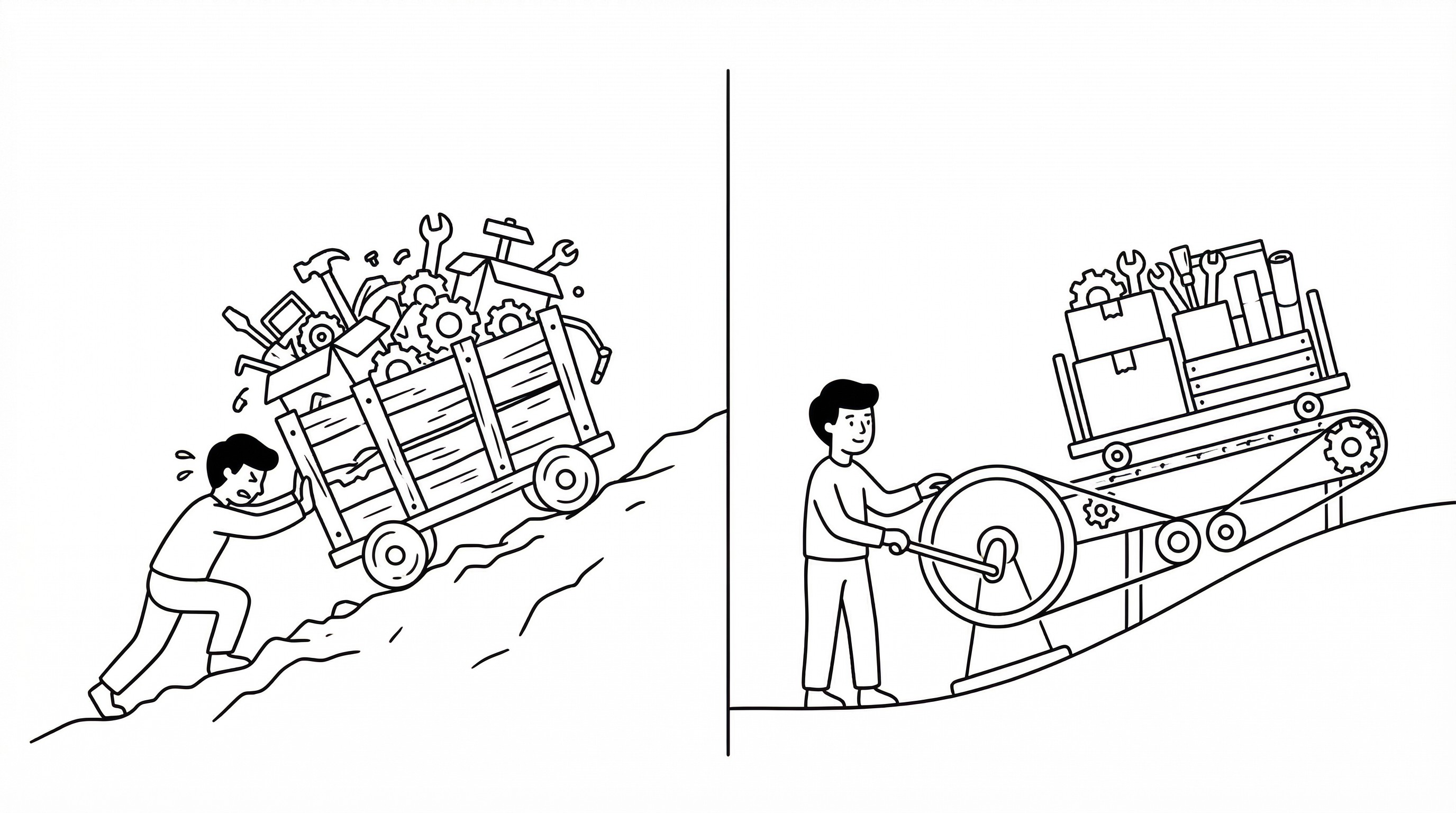
Most companies believe they have a branding problem when in reality they have a strategy problem. They invest in logos, colors, and visual systems without first defining what the brand is supposed to represent in the market. The result is an identity that looks refined but lacks direction.
Brand strategy and brand identity operate at different layers, yet they are often treated as interchangeable. Strategy defines positioning, differentiation, and perception. Identity translates those decisions into a visual and experiential system. When these layers are misaligned, the brand loses coherence.
The confusion typically starts with incentives. Founders and teams want visible progress. Visual design provides immediate output. Strategy, on the other hand, requires time, clarity, and difficult decisions. As a result, many teams skip or rush the strategic layer and move directly into execution.
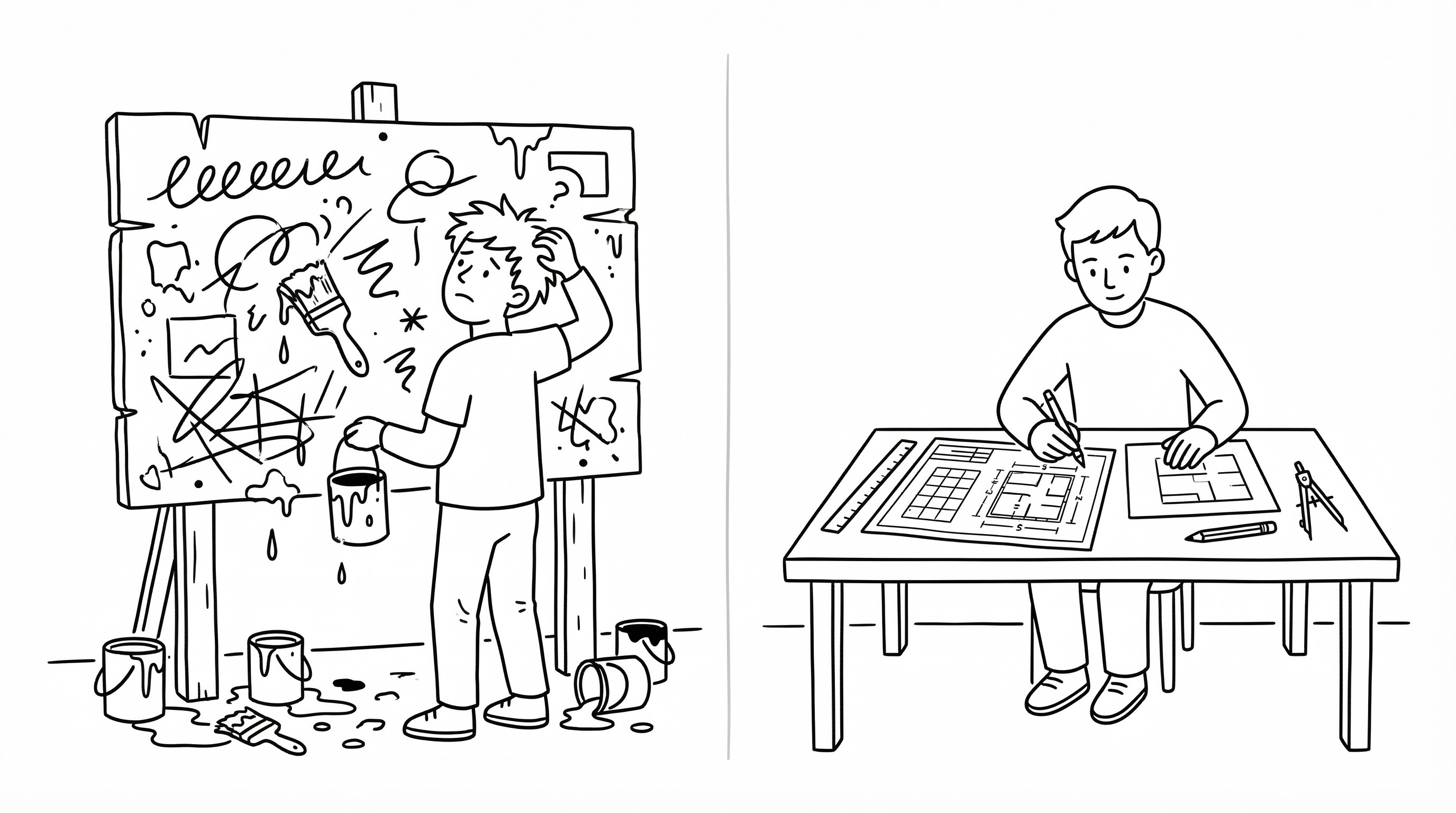
This creates a structural gap. Without clear positioning, the identity has no reference point. Design decisions become subjective, driven by trends or personal preference rather than strategic intent. Over time, the brand starts to drift. Different teams interpret it differently, leading to inconsistency.
Another issue is the illusion of differentiation. A company may believe that a unique logo or modern interface makes it stand out. In reality, competitors can replicate visual styles quickly. True differentiation comes from positioning, not aesthetics. Without strategy, identity becomes replaceable.
There is also a communication breakdown. Strategy is often defined internally but not properly encoded into the visual system. The identity fails to communicate what the brand stands for. Customers experience the brand but do not understand its value. This weakens trust and reduces conversion.
At a deeper level, this misalignment affects decision-making. A clear strategy acts as a filter. It guides what to build, what to communicate, and what to ignore. Without it, decisions become reactive. The brand shifts based on short-term needs rather than long-term direction.
To understand the relationship clearly, it is useful to think of strategy as intent and identity as expression. Strategy answers why the brand exists, who it serves, and how it is different. Identity answers how that difference is perceived visually and experientially.
A strong brand requires both layers to be tightly integrated. Strategy should inform every design decision. Typography, color, layout, and tone should all reinforce the same positioning. When this alignment exists, the brand becomes coherent. Every touchpoint sends a consistent signal.
Building this alignment requires a structured approach. The first step is defining positioning with precision. This includes target audience, competitive landscape, and value proposition. These are not abstract concepts. They are operational decisions that shape the entire brand.
The second step is translating strategy into design principles. These principles act as a bridge between thinking and execution. For example, a brand positioned around clarity and precision should reflect that through minimal layouts, controlled typography, and structured composition.
The third step is implementation across systems. The identity must be applied consistently across all touchpoints. This includes product interfaces, marketing materials, and communication channels. Consistency reinforces perception and builds recognition over time.
A critical factor in this process is discipline. It is easy to deviate from strategy when new opportunities arise. However, inconsistency weakens the brand. Strong brands maintain alignment even when it requires saying no to short-term gains.
There are also common misconceptions. One is that strategy is only necessary for large companies. In reality, early-stage companies benefit the most from clarity. Another misconception is that identity can define strategy. While design can influence perception, it cannot replace strategic thinking.
From a strategic perspective, the highest leverage point is clarity. When positioning is clear, execution becomes easier. Decisions become faster, and consistency becomes natural. Without clarity, even the best design work will fail to create impact.
Top-performing brands treat strategy as a foundation, not an afterthought. They invest in defining their position before scaling their identity. This allows them to build systems that are both coherent and adaptable.
In contrast, average brands focus on surface-level improvements. They update visuals without addressing underlying issues. This creates temporary momentum but does not solve the core problem. Over time, the same challenges reappear.
The cost of confusing identity with strategy is not just aesthetic inconsistency. It is a loss of direction. The brand becomes reactive, fragmented, and difficult to scale. This affects growth, perception, and long-term value.
A clear distinction between strategy and identity creates leverage. Strategy defines the path. Identity makes that path visible. When both are aligned, the brand becomes a system that consistently communicates value.
Ultimately, branding is not about how something looks. It is about how it is understood. Strategy ensures the brand is meaningful. Identity ensures that meaning is perceived. Removing either layer weakens the entire structure.